


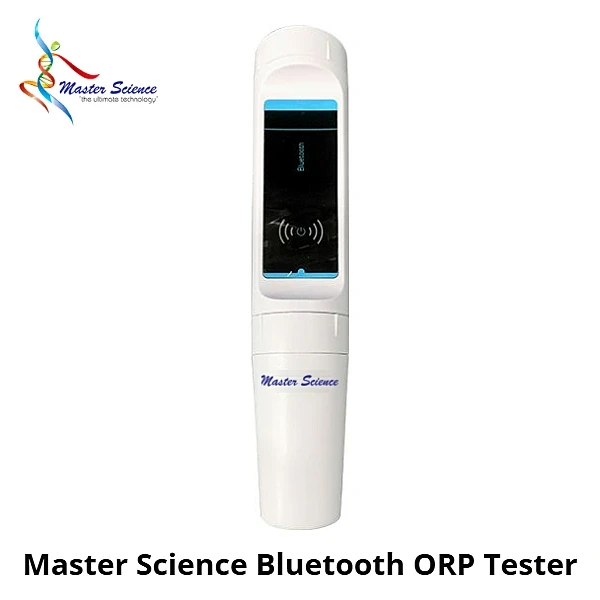
Bluetooth ORP Tester - Wireless Water Quality Redox Meter - 2000.0 mV Range - ±0.2 mV Accuracy
Inhouse product


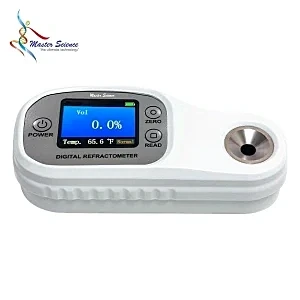
The Master Science Bluetooth ORP Tester is a wireless pen-type probe for measuring oxidation-reduction potential in water. It sends its readings by Bluetooth to a paired device, where the values are displayed and stored.
The range extends to 2000.0 mV with ±0.2 mV accuracy and a selectable resolution of 0.1 or 1 mV. Up to three testers can be connected to one device at the same time, so several parameters are shown side by side.
Technical Specifications
Specifications of the Master Science Bluetooth ORP Tester:
- Brand: Master Science
- Model Number: MSORP-BT20SWISS
- SKU: MSORP-BT20SWISS
- Brand: Master Science
- Model Number: MSORP-BT20SWISS
- SKU: MSORP-BT20SWISS
- Parameter: ORP (redox potential)
- ORP Range: Up to 2000.0 mV
- Resolution: 0.1 or 1 mV, selectable
- Accuracy: ±0.2 mV
- Calibration: 1 point (offset)
- Measurement Modes: Relative and absolute millivolt
- Temperature Compensation: Automatic
- Connection: Bluetooth; up to 3 testers per device
Key Benefits
- No cable to the display: the Master Science Bluetooth ORP Tester transmits wirelessly.
- Several probes on one screen: up to three testers connected together.
- Locked end point: auto-read function.
- Out-of-range warnings: limit alarm.
- Protected settings: password for calibration and setup.
For pH and ORP on the bench, see the Master Science benchtop pH meter.
Product Features
Measurement
- One-point offset calibration to a known standard
- Relative and absolute mV modes
- Auto-read senses and locks the end point
Data and Alarms
- Timed interval readings sent to memory or printer
- Limit alarm
- Calibration-due alarm
Setup
- Password protection
- Reset to factory defaults
Applications
The Master Science Bluetooth ORP Tester is used for:
- ORP checks in water quality testing
- Multi-parameter set-ups with other Bluetooth testers
- Routine monitoring with logged readings
Common Problems and How This Tester Helps
How the Master Science Bluetooth ORP Tester simplifies redox measurement:
- Cables tangling around sample vessels: wireless connection.
- Forgotten calibrations: calibration-due alarm.
- Readings noted before they settle: auto-read lock.
- Unauthorised changes to settings: password protection.
Frequently Bought Products
"Explore Master Science, your trusted provider of high-quality laboratory equipment and innovative solutions. Discover our extensive range of analytical instruments and exceptional customer support, all dedicated to empowering scientific discovery across industries. Join us in advancing research and setting new standards globally."


